Generating a Multi-Panel Visualization in EEMS
EFDC+ Explorer is a powerful tool for visualizing and analyzing EFDC+ model output and input data.
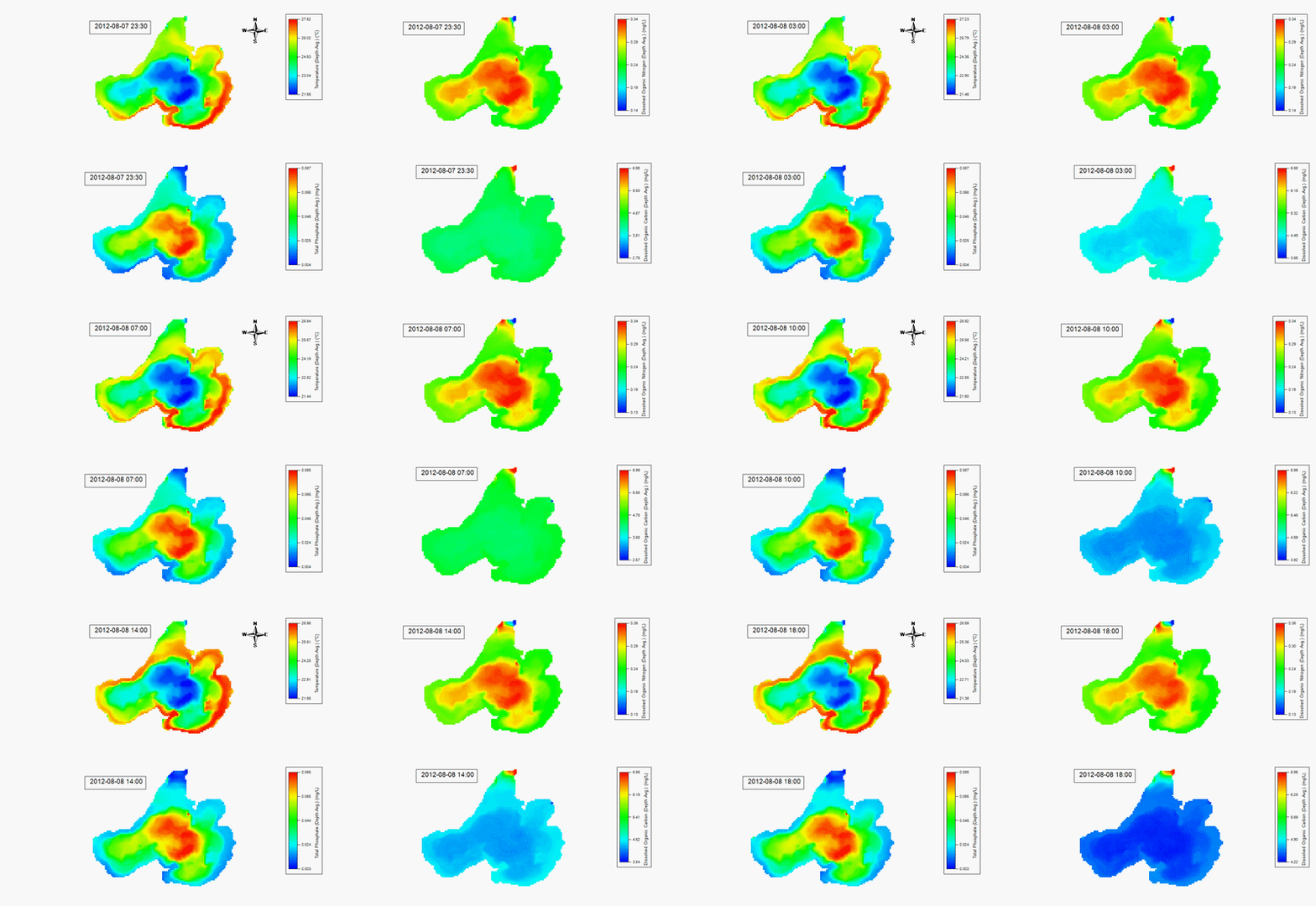
EFDC+ Explorer is a powerful tool for visualizing and analyzing EFDC+ model output and input data.
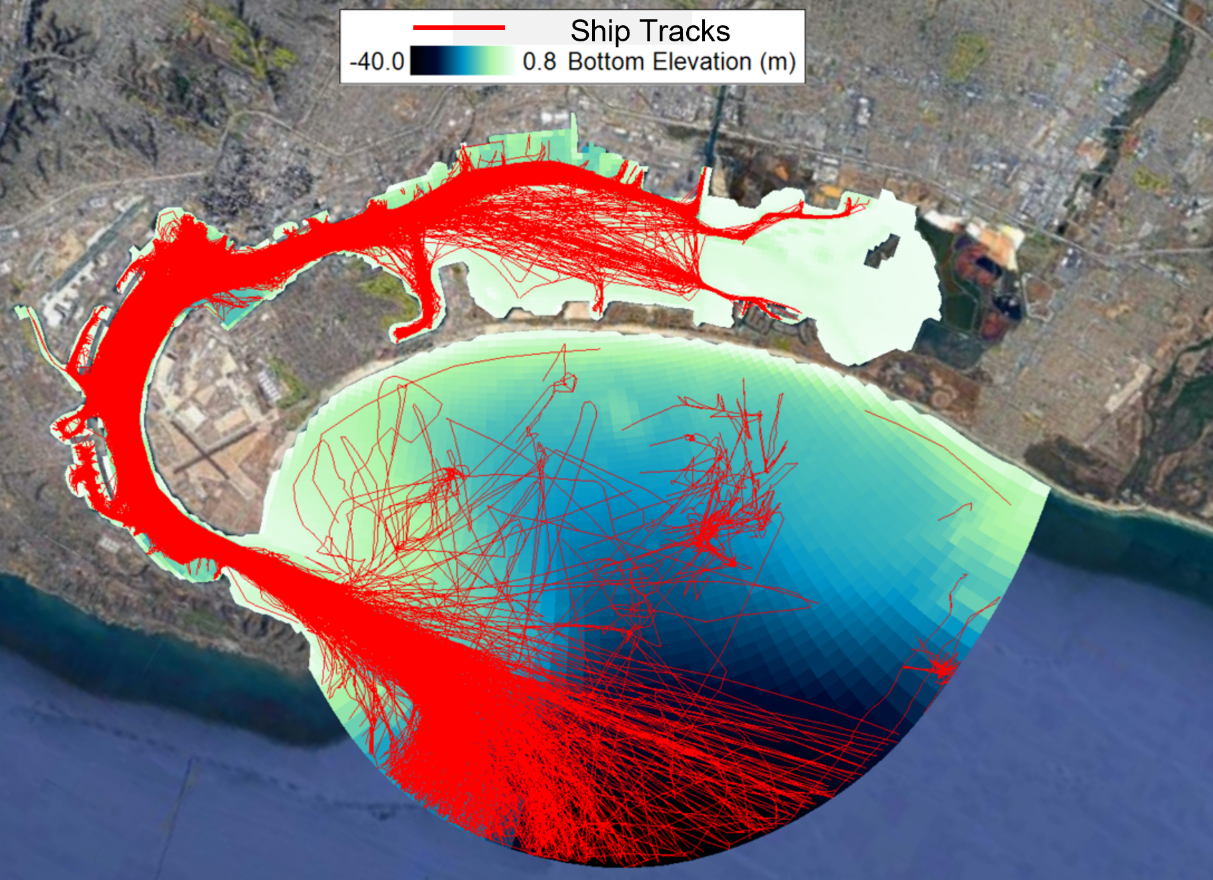
Propeller wash (propwash) causes sediment scour in the seabed that can threaten the safety of structures in ports and harbors and cause environmental problems

Improving EFDC+ model simulation efficiency can reduce the model runtimes, which is critical for many modeling applications.

In a previous blog post, we outlined some of the ways to improve EFDC+ model simulation efficiency to reduce the model runtimes.

JSON (JavaScript Object Notation) is an increasingly common standard data format to store and transmit data objects that use text designed to be easily read by humans.

A waterbody typically has multiple tributaries contributing flow and other constituents to the domain.

In a previous blog, we outlined how our automated integration testing works at a high level.
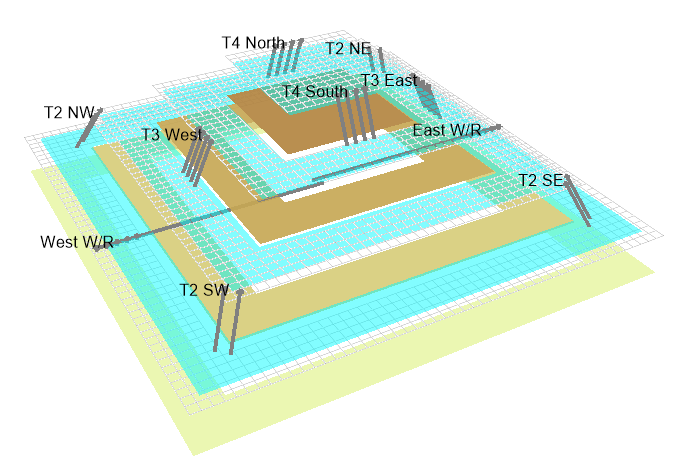
The Lagrangian Particle Tracking (LPT) module in EFDC+ was developed by DSI in 2009 and has served as an effective tool for solving numerous problems in fluid dynamics.
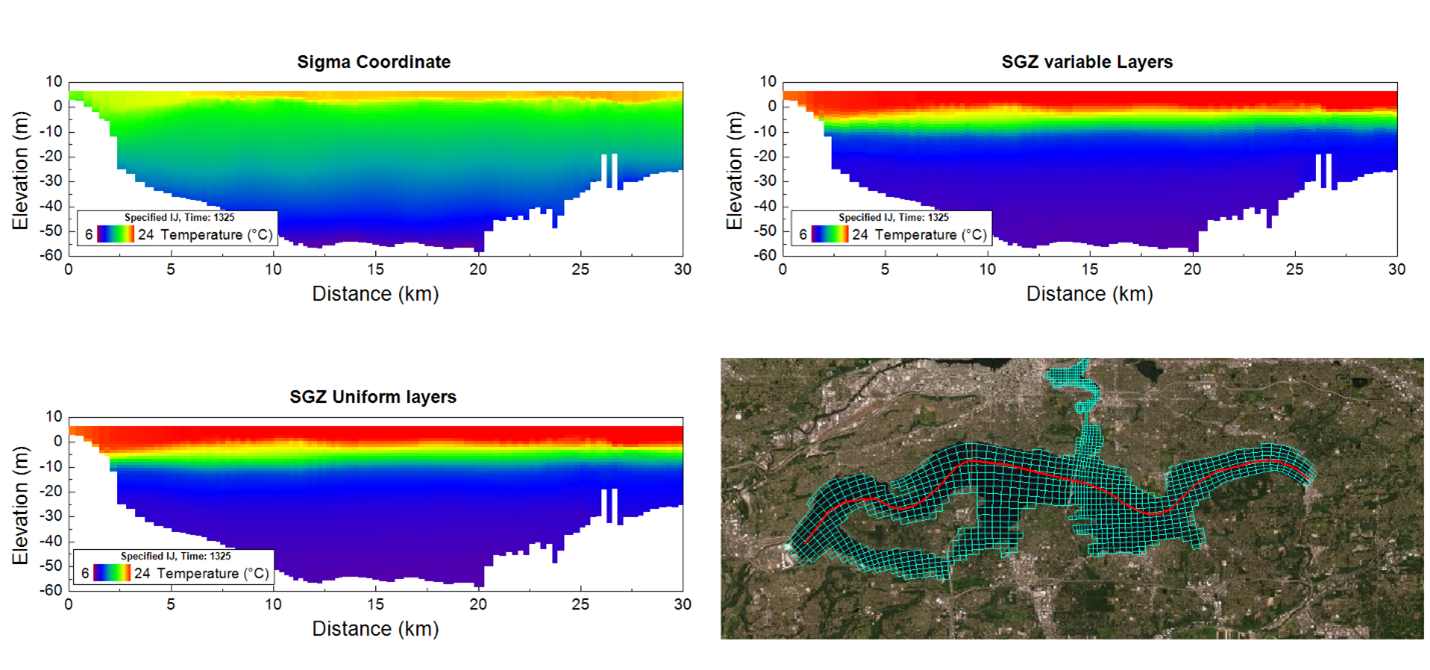
EFDC+ is a versatile hydrodynamic model capable of operating in 1-, 2-, or 3-dimensional (3D) modes. For 3D simulations, EFDC+ allows users to choose from two vertical layering schemes

A new vertical layering option following the Sigma-Zed (SGZ) approach has recently been added to EEMS. The new SGZ scheme offers significant flexibility in configuring the vertical layering system

EFDC+ Explorer is a powerful tool for visualizing and analyzing data.

The modeling software you select for your project depends on project objectives, budget, schedule, and available programming resources.

DSI has developed an improved version of the EFDC code to help deal with pressure gradient errors that occur in simulations that have steep changes in bed elevation. This new version of the code is called the Sigma-Zed code (SGZ) and has been integrated into the EFDC+

Simulating hydraulic structures in hydrological and hydraulic calculations is crucial for ensuring the accuracy, safety, and sustainability of water resource management and infrastructure development projects

The selection of a single layer vs. multiple layers for simulating hydrodynamic and water quality depends upon a range of factors.