In-Person EEMS Training Edmonds, WA · Sept 21–23, 2026 Register →
Environmental Compliance

Thermal Compliance

Water temperature has significant and systematic effects on biological processes at all levels of organization

Thermal Compliance for Power Plants & Aquatic Ecosystems

Water temperature shapes aquatic ecosystems in profound ways — influencing dissolved oxygen levels, biological activity, and the habitat ranges of cold-water species like trout and salmon. For power plant operators and water managers, modeling thermal discharge impacts is essential to protecting these systems and meeting regulatory requirements.

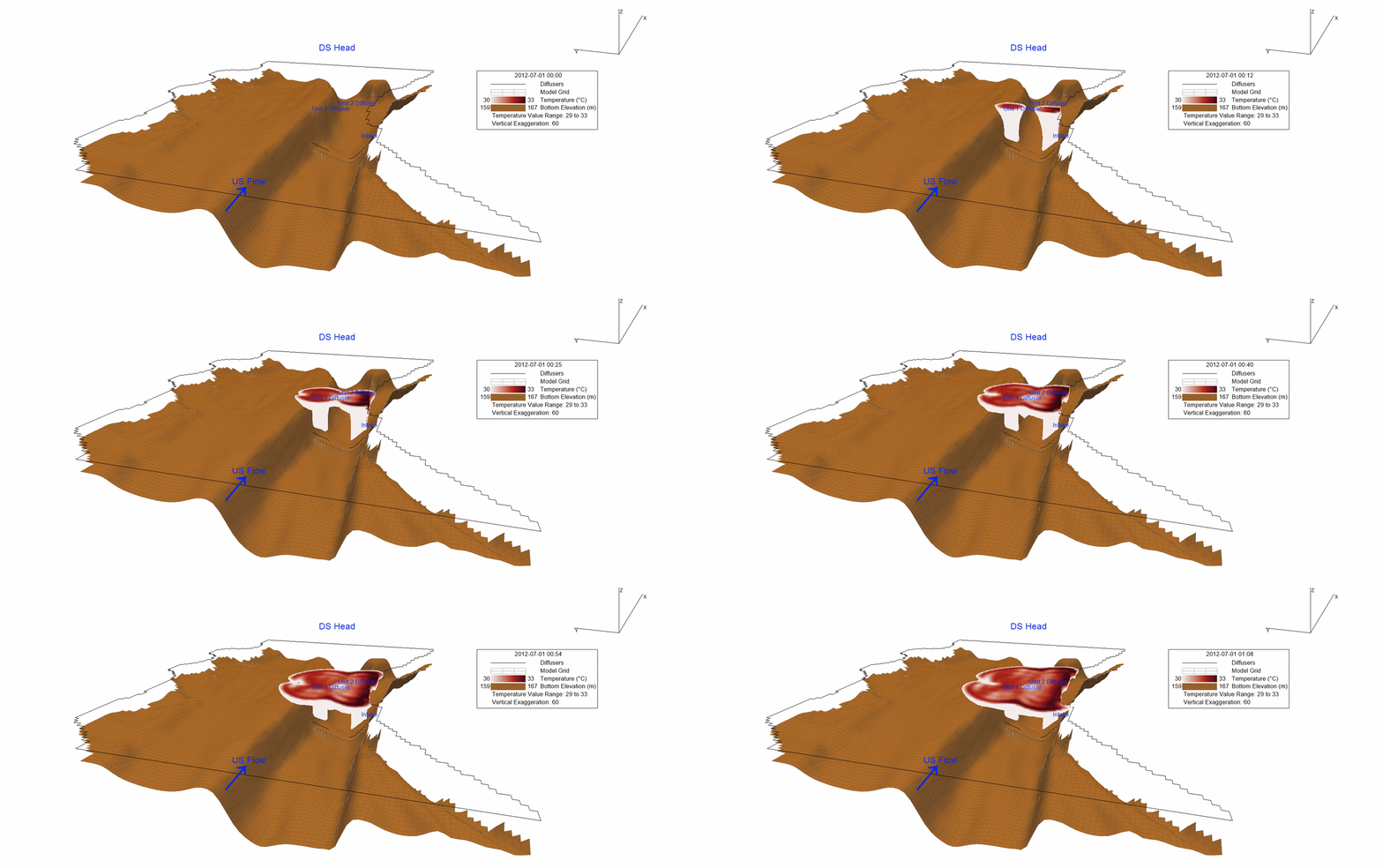
3D simulation of thermal discharge from nuclear power plant diffusers. 3D simulation of thermal discharge from nuclear power plant diffusers.
Thermal discharge from nuclear power plant diffusers
EEMS Capabilities

EFDC+ delivers a comprehensive suite of temperature sub-models, including surface heat exchange, solar radiation, a bed thermal model, and an ice sub-model for cold-climate applications. For thermal power plants, EEMS simulates once-through cooling system impacts — including forced evaporation — giving operators the analytical foundation to demonstrate and maintain thermal compliance with confidence.

Projects

Black Warrior River, Alabama, USA — Hydro-Thermal Model & Real-Time System

Visit source

The Black Warrior is one of the most intensively managed river systems in the southeastern United States, where a cascade of locks and dams balances hydroelectric generation, municipal water supply, and commercial navigation. DSI developed an EFDC+ hydro-thermal model of the river to simulate coupled hydrodynamic and temperature dynamics across the regulated reaches, giving Alabama Power a defensible scientific basis for assessing environmental impacts, demonstrating regulatory compliance, and optimizing day-to-day operations.
Coosa River, Alabama, USA — Real-Time Thermal Hydrodynamic Model

Visit source

For the regulated reach between Logan Martin and Lay Dams, DSI built a real-time, three-dimensional EFDC+ model that helps Alabama Power maintain compliance with state thermal standards. The system continuously ingests live data on dam releases, power plant discharges, tributary inflows, and meteorological conditions, and was rigorously calibrated against measured temperatures and water levels. Running 24/7 as an operational decision-support tool, it allows operators to anticipate thermal exceedances before they occur rather than react after the fact.

Chassahowitzka River and Estuary System, Florida, USA — Groundwater & Thermal Habitat

Visit source

The Southwest Florida Water Management District used EFDC+ to develop a fully 3D model of the Chassahowitzka spring-fed river and estuarine system, quantifying how reduced spring discharge alters temperature and salinity throughout the network. The model pinpointed which refuges still meet manatee thermal habitat criteria under critical low-flow conditions — directly informing the minimum-flow rule needed to protect this federally listed species while balancing regional groundwater demands.

Lake Washington, Washington, USA — Real-Time Temperature Model

Visit source

Lake Washington’s steep bathymetry and decades of high-quality temperature observations make it a benchmark site for EFDC+‘s Sigma-Zed vertical layering. DSI constructed a 1,183-cell, 55-layer model that accurately reproduces the formation, persistence, and turnover of the lake’s thermal layers throughout the annual cycle. The model runs in real time and feeds a publicly accessible web portal — demonstrating both EFDC+‘s computational performance and its value as a transparent scientific communication tool. Additional resources: free grid and video walkthrough.

Delaware River, USA — Thermal and Environmental Assessment

EEMS has been applied to the Delaware River for thermal and water quality assessment work, leveraging the model’s heat transport capabilities to evaluate temperature regimes, quantify impacts on aquatic ecosystems, and support compliance with state and federal water quality standards across one of the most industrially significant watersheds in the eastern United States.

Lake Mead, Nevada/Arizona, USA — Thermal Stratification

Visit source

DSI applied EFDC+‘s Sigma-Zed layering to Lake Mead, the Colorado River reservoir impounded by Hoover Dam, to test the model’s ability to resolve thermal structure in a large, deep, strongly stratified system. Results showed that EEMS accurately reproduces both the seasonal formation and the spatial evolution of temperature layers — a capability directly relevant to water supply forecasting, recreational management, and ecological assessment in the increasingly stressed Colorado River Basin.

Dam with mountains