Numerical Simulation of Flow Dynamics in a Tidal River Under Various Upstream Hydrologic Conditions
Visit sourceDirectly models flow/velocity dynamics under varying conditions.
Coastal waters and estuaries, as well as rivers and dams, are environments with significant impact on the regional economic and recreation activities as well as bio-diversity.
Coastal waters and estuaries, as well as rivers and dams, are environments with significant impact on the regional economic and recreation activities as well as bio-diversity. These systems can have a great range of shore-ocean and river-ocean interactions. Quantitative estimates of water levels, surface velocities and deeper circulation and mixing are needed to assess restorative projects or new infrastructure developments.
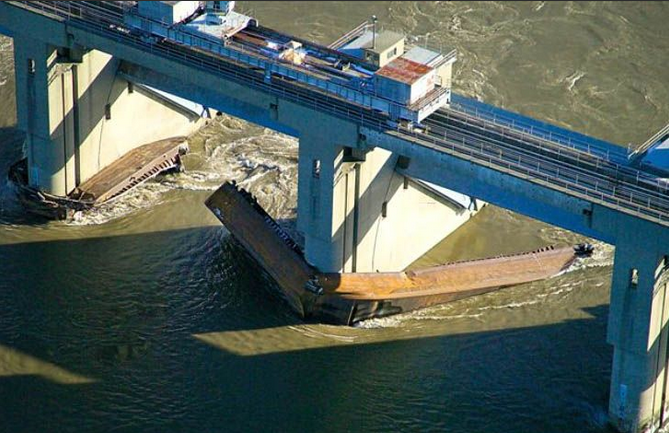
EEMS provides proven tools for simulation of hydrodynamics, including detailed analysis of flow patterns and velocity. These are also full linked to sediment transport and water quality to provide a comprehensive analysis. EFDC+ has been used in hundreds of riverine and coastal circulation models and in conjunction with EE provides you with powerful tools to assess environmental issues and solutions. Features of EFDC+ which assist coastal studies include:
Directly models flow/velocity dynamics under varying conditions.
Residual circulation is a flow-pattern analysis, though stratification is the co-focus.
Directly about extracting/visualizing velocity results.
Directly about extracting/visualizing velocity results.
Tracks flow-driven particle movement through structures.
Hydraulic structures directly govern local flow patterns.
Same rationale — configures flow behavior at structures.
Directly a flow-pattern configuration feature.
Directly about flow/velocity calculation and validation.
Directly models flow through navigation locks.
Directly a flow-obstruction/pattern feature.
Same rationale as above.
Same rationale as above.