Simulating Hydraulic Structures in EEMS
Visit sourceCovers the modeling capability underlying dams, intakes, and tailwater structures generally.
Assessing the potential for tail-water scour downstream of a dam is a key issue in hydropower projects.
Assessing the potential for tail-water scour downstream of a dam is a key issue in hydropower projects. Dam failure due to poorly designed spillways and forebays can result in significant loss of life and property. Furthermore, dams often withdraw water from the hypolimnion where dissolved oxygen levels are lower, impacting water quality in the tailwater. Tailwaters may also be found to contain potentially toxic substances.
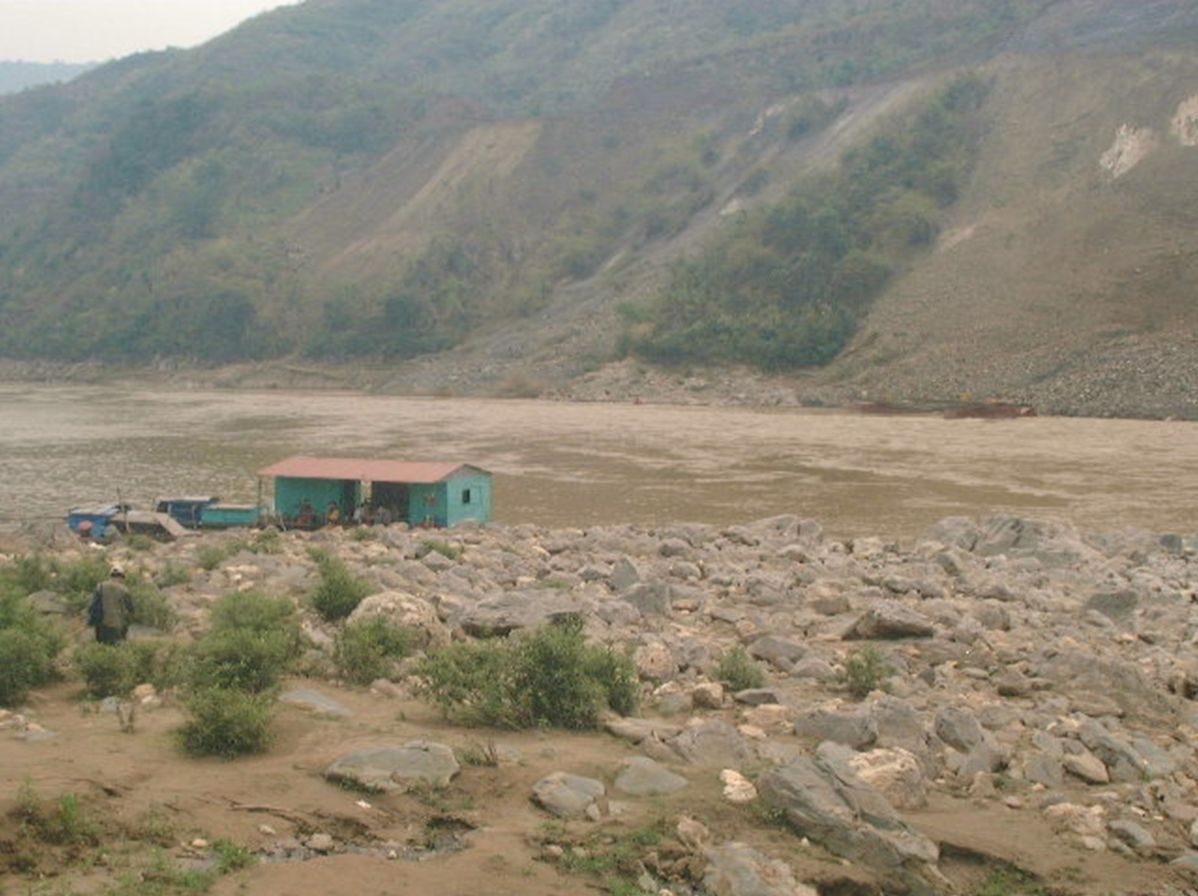
The EFDC+ model is commonly used to predict scour and deposition patterns in the forebay, main channel and floodplain downstream of a dam. EEMS allows the user to readily visualize the flow regime, shear stress, and sediment bed erosion patterns. Lagrangian particle tracks may also be implemented to better understand the 3D hydrodynamic system. EEMS is also frequently used to simulate low DO levels in the tailwater and assess possible impacts on the habitat.
Covers the modeling capability underlying dams, intakes, and tailwater structures generally.
Same rationale — configuration options for structure behavior applicable across all three sub-categories.
Demonstrates particle tracking through structures, relevant to intake/tailwater flow behavior but not framed as either specifically.
A structure-flow configuration feature usable for dam, intake, or tailwater setups.
Flow-blocking features relevant to structure operations generally, but not tied to a specific dam-break, intake, or tailwater case study.
Flow-blocking features relevant to structure operations generally, but not tied to a specific dam-break, intake, or tailwater case study.
Flow-blocking features relevant to structure operations generally, but not tied to a specific dam-break, intake, or tailwater case study.