Contaminated Sediment Management

Feasibility Studies

Many major cities have areas which have historically seen significant industrial and manufacturing operations

Challenges with Remedial Investigations/Feasibility Studies

Many major cities have areas which have historically seen significant industrial and manufacturing operations, including oil refineries, fertilizer manufacturing, and coal yards. Untreated storm water, industrial waste water and domestic sewage released to nearby waterbodies from these areas frequently lead to contaminated sediments. Remedial Investigations (RI) allow in-depth study designed to gather the data needed to determine the nature and extent of contamination of a site. They also serve to assess potential risks to human health and the environment. An RI serves as a foundation for evaluating remediation alternatives in a Feasibility Study (FS). A significant part of the RI/FS is focused on interpreting the site data and developing computer models to aide this process.
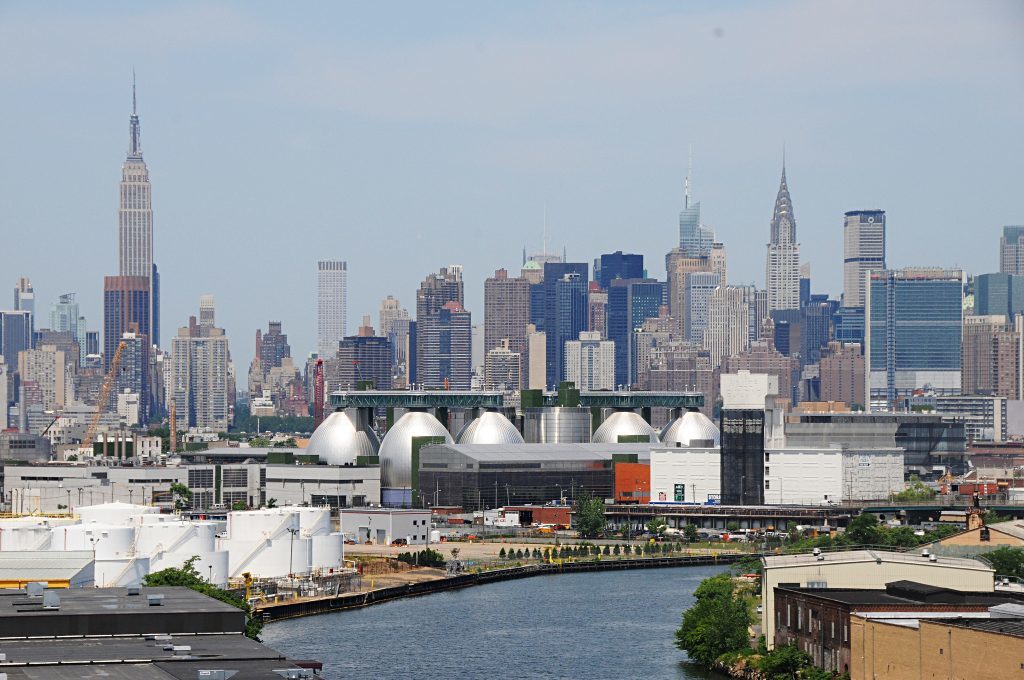
Newtown Creek waterway bordered by industrial buildings. Newtown Creek waterway bordered by industrial buildings.
Newtown Creek (Source: Newtown Creek Alliance)
EEMS Capabilities

EEMS has been used to support major RI/FS for Superfund sites in the USA because of its powerful capability for simulating sediment resuspension, transport and toxics. Two sediment models are available in the EFDC+ model. The first is the conventional EFDC sub-model developed at Virginia Institute of Marine Science which accurately simulates cohesive and non-cohesive transport. Alternatively, the user may select the start-of-the-art SEDZLJ sub-model developed by Sandia National Labs. This is an increasingly favored approach and used extensively in the Newtown Creek study in New York. It is an improvement on previous models because it may directly incorporate site-specific data (flume studies), while maintaining a physically consistent, unified treatment of bedload and suspended load.

Related Research

Two-Dimensional Numerical Modelling of Sediment and Chemical Constituent Transport Within the Lower Reaches of the Athabasca River

Visit source

Directly models chemical constituent (PAH/metals) transport and identifies “areas of concern,” core input for both remedial design and feasibility assessment.

Sediment Transport and Metals Modeling in an Urban Stream — The Don River, Toronto

Visit source

Directly models metals contamination (copper, lead, zinc) fate and transport, the kind of data needed to design or evaluate a remedy.

Modeling of Sediment and Heavy Metal Transport in Taihu Lake, China

Visit source

Directly models heavy metal exchange between sediment and water column, informing contamination extent and remedy design.

Using EEMS to Model the Effects of Sediment Dredging

Visit source

Dredging is one of the three named remediation techniques on the solution page (dredging, capping, in-situ treatment), making this a direct match.

Dam with mountains